
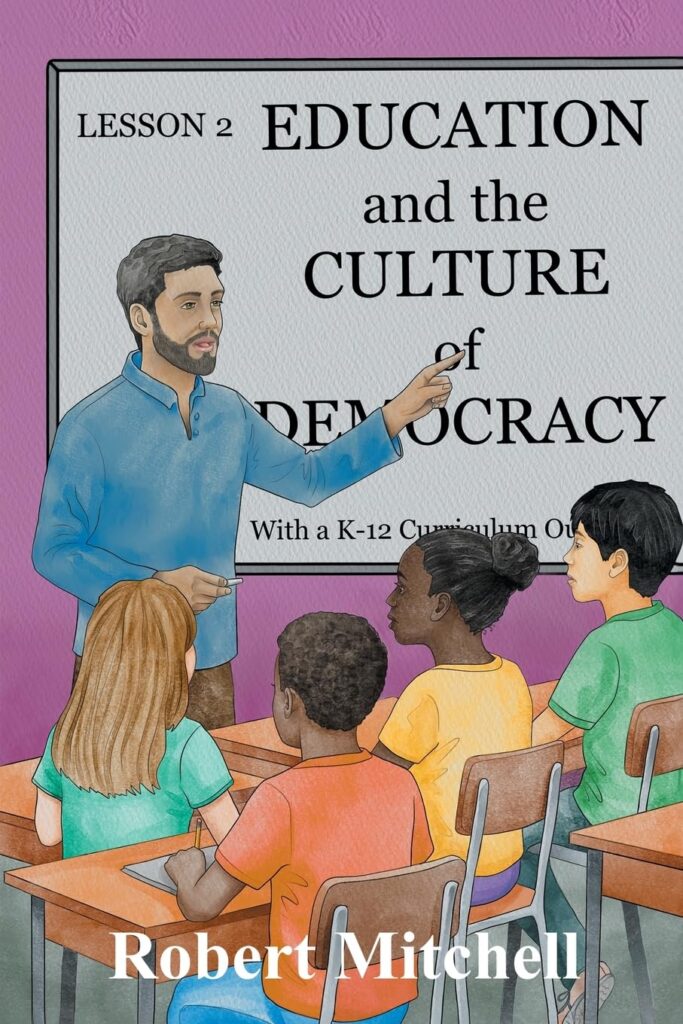
Education and the Culture of Democracy With a K-12 Curriculum Outline
The question facing America is: How do we transform our dysfunctional political, social, and economic democracy into a culture of democracy and not an authoritarian republic?
A culture of democracy is defined by the two prominent examples on which our democracy is based, the ancient Greeks and Native Americans. This ideal was amplified in America by nineteenth-century transcendentalists.
For a more modern picture, poet-philosopher T. S. Eliot discussed how education, culture, and politics come together to create the national-cultural identity and character of a nation. The conflict we now face is between how we define our self-conscious national identity as Americans, and our diverse racial, ethnic, and religious cultural identities that we each carry forward in our cultural heritage.
In a democratic culture, this conflict is mitigated within us and our society by finding the common spiritual thread in our democracy that transcends our differences and binds us together. This discovery is the natural evolution of our experiment in democracy. In the classroom, discovering the culture of democracy engages the personality of the teacher and requires a cultural curriculum.
Part III is a K-12 curriculum outline to teach the culture of democracy.